
Introduction
One of the most common questions business owners ask before investing in digital marketing is:
“Should I choose Meta Ads or Google Ads?”
The truth is, there isn’t a universal answer.
Both platforms are incredibly powerful, but they solve different business challenges. Choosing the wrong one can result in wasted budget, low-quality leads, and disappointing returns. Choosing the right one can significantly increase enquiries, sales, and long-term growth.
The best decision depends on your industry, business goals, customer behavior, and the stage of the buyer’s journey you’re targeting.
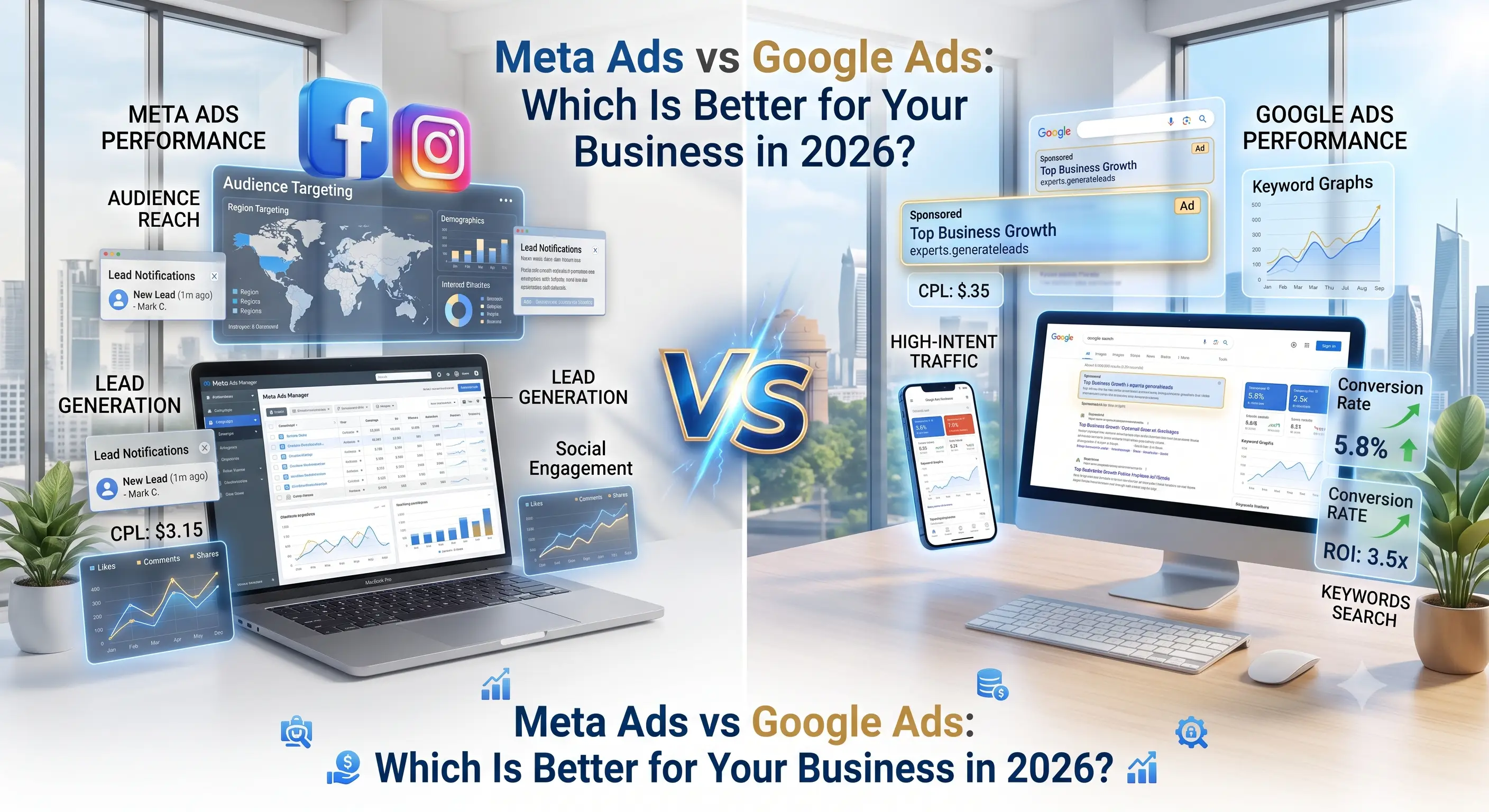
In this guide, we’ll compare Meta Ads and Google Ads in detail, explain when each platform performs best, and help you decide which advertising strategy is right for your business.
Understanding the Difference
Although both platforms display advertisements, they operate very differently.
Meta Ads
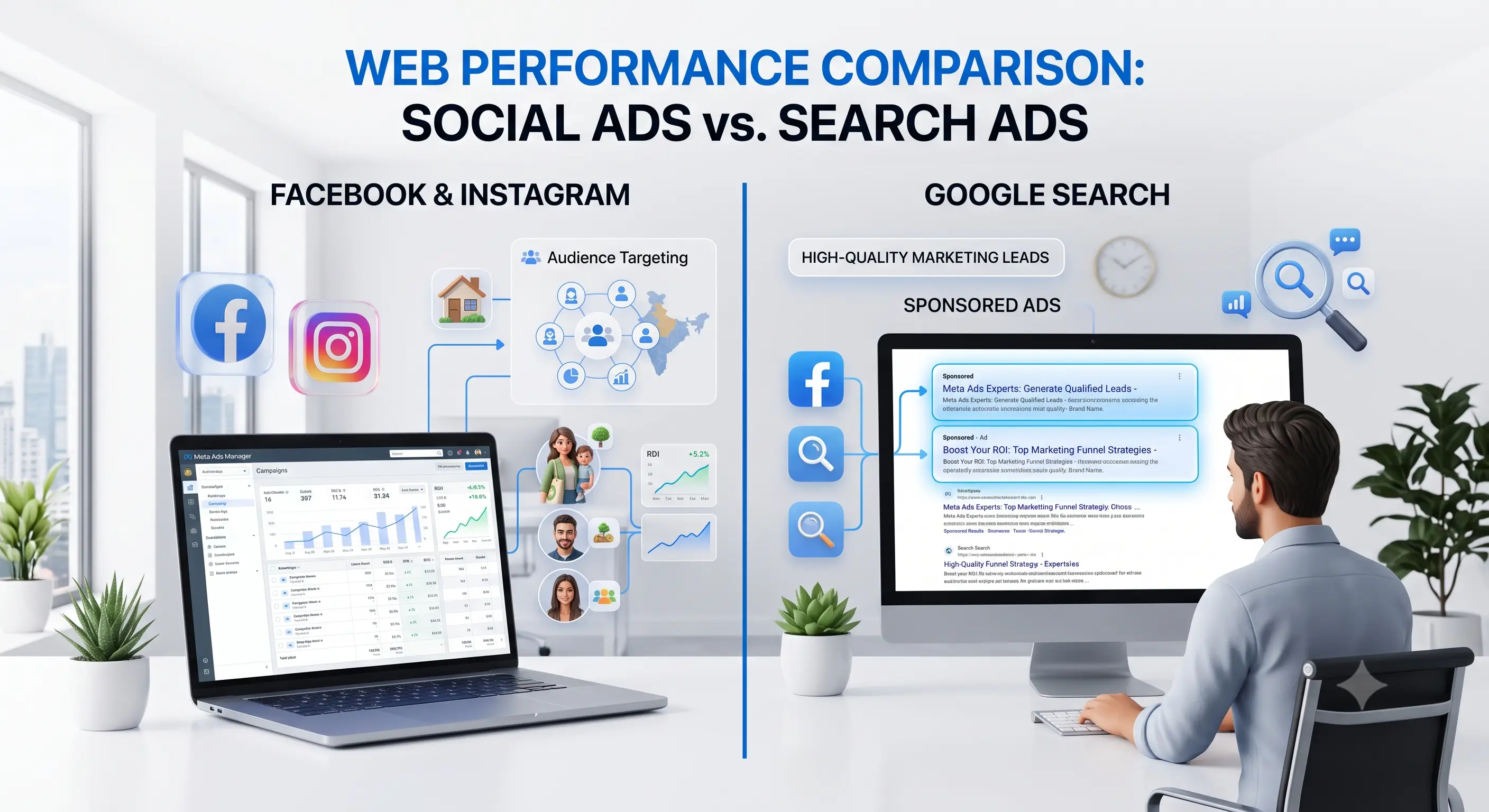
Meta Ads (Facebook and Instagram) are based on interest, behavior, demographics, and user activity.
People aren’t actively searching for your business—they discover your business while browsing their social feeds.
This makes Meta Ads ideal for creating demand and introducing your brand to new audiences.
Google Ads
Google Ads target users who are actively searching for products or services.
Someone searching for:
“Website development company near me”
“Meta Ads agency”
“Real estate lead generation”
already has purchase intent.
Google Ads capture existing demand rather than creating it.
When Meta Ads Are the Better Choice
Meta Ads work exceptionally well when your goal is to:
Build brand awareness
Generate leads
Launch new products
Promote real estate projects
Increase social engagement
Retarget website visitors
Create demand for your services
Meta’s advanced audience targeting allows businesses to reach users based on:
Interests
Behaviors
Job titles
Life events
Purchase habits
Lookalike audiences
This makes it one of the most effective platforms for reaching potential customers before they’re actively searching.
When Google Ads Deliver Better Results
Google Ads excel when customers already know what they need.
Examples include:
Emergency services
Lawyers
Dentists
Website developers
Digital marketing agencies
Hotels
Local businesses
Ecommerce searches
Because users are searching with intent, Google Ads often produce highly qualified traffic.
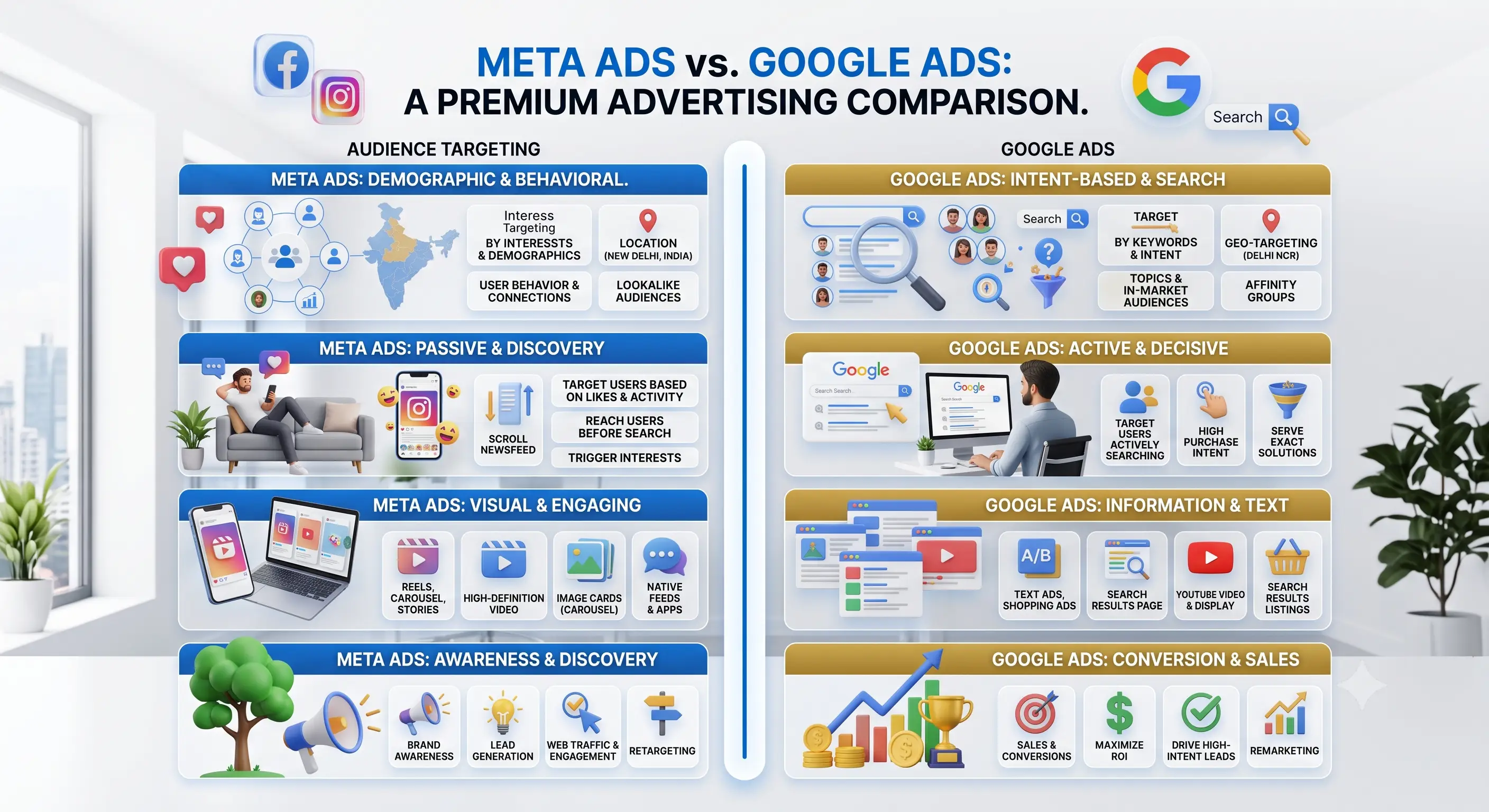
Meta Ads vs Google Ads Comparison
| Feature | Meta Ads | Google Ads |
|---|---|---|
| Customer Intent | Discovery | Active Search |
| Best For | Lead Generation & Brand Awareness | High-Intent Leads |
| Audience Targeting | Interests & Behaviors | Search Keywords |
| Creative Format | Images, Videos, Reels, Carousels | Search, Display, Shopping, Video |
| Remarketing | Excellent | Excellent |
| Lead Generation | Very Strong | Strong |
| Ecommerce | Excellent | Excellent |
| Brand Building | Outstanding | Good |
Which Businesses Should Use Meta Ads?
Meta Ads are particularly effective for:
Real Estate
Education
Coaching
Healthcare
Restaurants
Salons
Fitness Centers
Home Services
Travel Agencies
Interior Designers
Fashion Brands
Local Businesses
Businesses with visually appealing products or services generally perform very well on Meta platforms.
Which Businesses Should Use Google Ads?
Google Ads perform exceptionally well for:
Website Development
SEO Agencies
Lawyers
Doctors
Accountants
Repair Services
Ecommerce Stores
Software Companies
B2B Services
Consultants
These industries benefit from customers actively searching for solutions.
Why Many Businesses Combine Both Platforms
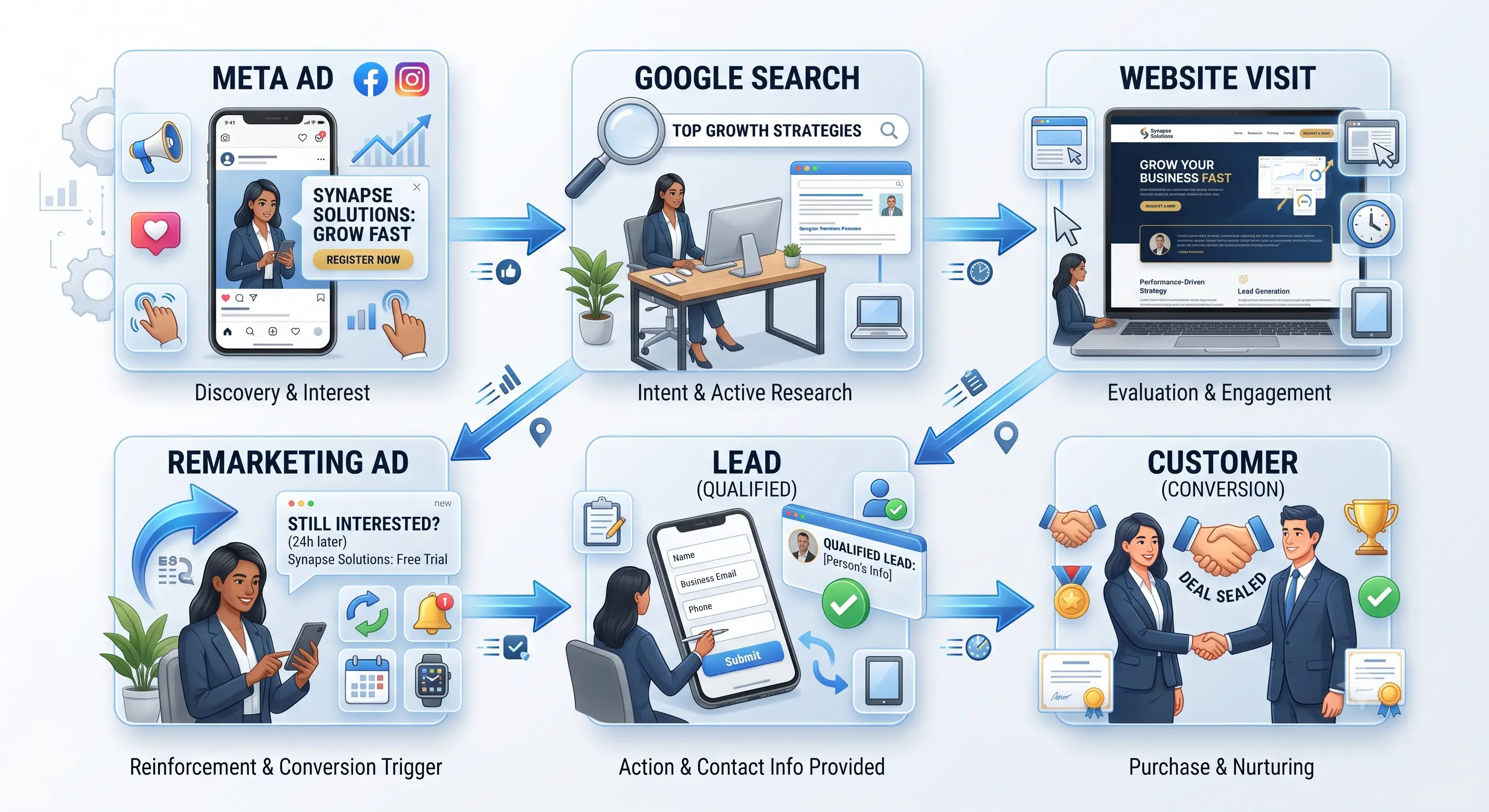
The most successful businesses don’t choose one platform—they use both strategically.
For example:
A customer discovers your business through a Meta Ad.
Later, they search your company on Google.
They visit your website.
Leave without enquiring.
A few days later, they see your remarketing advertisement.
Finally, they submit an enquiry.
This multi-channel approach creates multiple touchpoints, increasing trust and improving conversion rates.
Common Mistakes Businesses Make
Avoid these common mistakes:
❌ Choosing a platform because competitors use it
❌ Ignoring customer intent
❌ Running ads without conversion tracking
❌ Sending paid traffic to poor landing pages
❌ Measuring only clicks instead of conversions
❌ Using the same creative on every platform
❌ Never testing new campaigns
Advertising success depends on strategy—not just the platform.
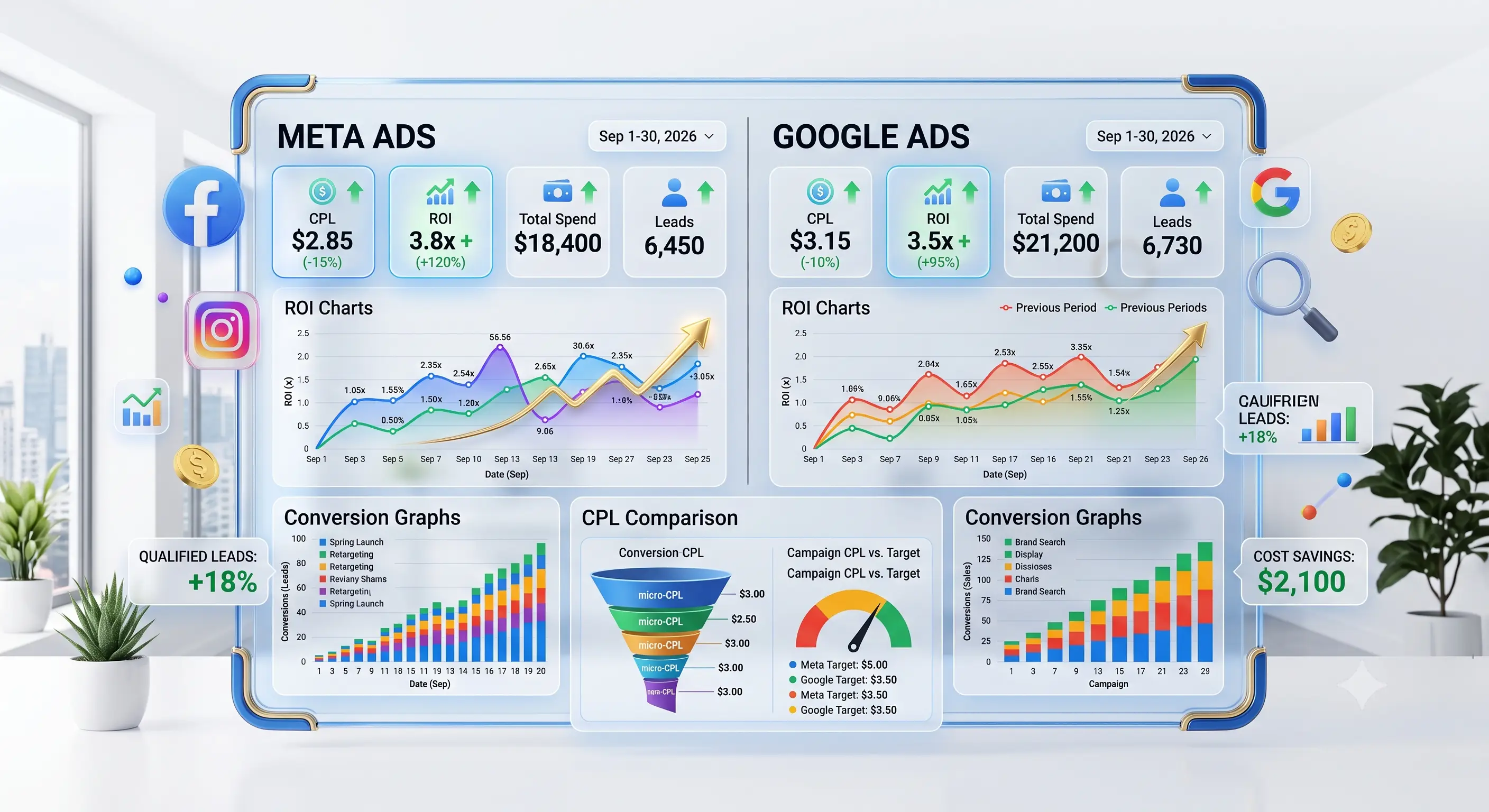
Which Platform Offers Better ROI?
There isn’t a universal winner.
ROI depends on factors such as:
Industry
Competition
Audience
Creative quality
Website experience
Landing pages
Follow-up process
Campaign optimization
A well-managed Meta campaign can outperform Google Ads in one industry, while Google Ads may produce better results in another.
The goal should always be to invest where your audience is most likely to convert.
Final Thoughts
Meta Ads and Google Ads are not competitors—they are complementary tools within a successful digital marketing strategy.
Meta Ads are exceptional for building awareness, reaching new audiences, and generating demand through engaging visual content. Google Ads excel at capturing users who are actively searching for solutions and are often closer to making a purchasing decision.
The most effective strategy isn’t about choosing the “better” platform—it’s about choosing the right platform for your business objectives or combining both to create a complete customer journey.
Businesses that align their advertising strategy with customer behavior, strong landing pages, and continuous optimization consistently achieve better long-term results.
Conclusion CTA
Ready to Choose the Right Advertising Strategy?
At Solertia Digital Solutions, we help businesses identify the most effective advertising channels based on their goals, audience, and budget. Whether it’s Meta Ads, Google Ads, or a combination of both, we build data-driven campaigns designed to generate qualified leads and measurable business growth.
👉 Book your free digital marketing consultation today and let our experts recommend the best advertising strategy for your business.